England’s Smart Transport Upgrade 2026: Real-Time Bus Tracking, Contactless Travel, and Better Journey Planning
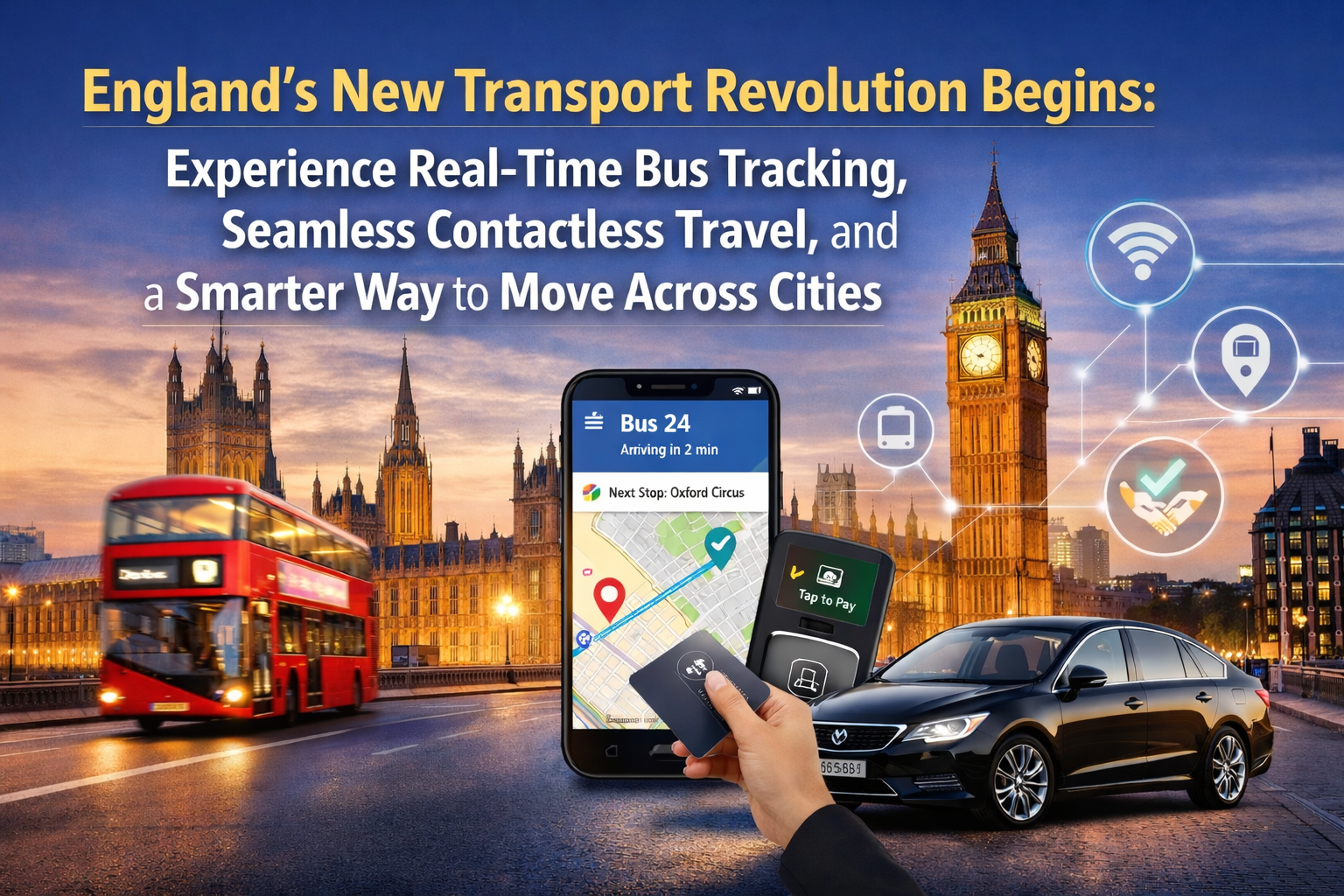
England’s transport network is moving into a smarter digital phase, with real-time bus tracking through Google Maps and wider contactless travel across buses, trams, and trains. For passengers, this means clearer journey information, better timing, and a more connected travel experience from start to finish.
For people travelling in and around London, these upgrades are especially relevant because expectations around speed, convenience, and visibility are higher than ever. Travellers now want to know where their transport is, when it will arrive, and how smoothly they can move between airports, hotels, stations, and city destinations without unnecessary delays.
For anyone planning airport arrivals, business travel, hotel pickups, or longer city journeys, reliable transport remains a practical part of the experience. Whether you are booking Airport Transfers, arranging direct Hotel Transfers, or planning London tours, modern travel now depends on live updates, timing accuracy, and smarter route planning.
This guide explains what England’s new real-time transport direction means, how bus tracking and contactless travel are changing the passenger experience, and why services from a TfL registered operator like LTR Minicab still matter for airport journeys, hotel travel, and private hire where real-time flight tracking plus driver and vehicle monitoring add extra confidence.
Quick Navigation
- Why England’s Transport Upgrade Matters in 2026
- Real-Time Bus Tracking Through Google Maps
- Contactless Travel Across Buses, Trams, and Trains
- How Passengers Benefit from Smarter Travel Data
- Why Private Hire Still Matters in a Smart Transport Era
- LTR Minicab, Real-Time Flight Tracking, and Vehicle Monitoring
- Airport, Hotel, and City Travel in a Connected Network
- Public Transport and Private Hire Compared
- Useful Travel Tips for Passengers
- Final Thoughts
Why England’s Transport Upgrade Matters in 2026
England’s transport update matters because passengers increasingly expect the same level of visibility from travel that they already get from food delivery, courier apps, and airline notifications. People no longer want to guess when a bus will arrive or wait at a stop without knowing whether a service is delayed, diverted, or close by.
This shift is important for more than daily commuting. It affects airport passengers, business travellers, families visiting London, students, tourists, and anyone moving between transport modes in unfamiliar areas. Better data helps reduce stress, improve timing, and make the full journey feel more predictable.
From a wider travel perspective, smarter transport also helps join different parts of a journey together. A passenger may travel by train, continue by bus, and then rely on a pre-booked minicab for the final part of the route. When the public side becomes more trackable, the whole system works better for users.
Figure 1: Why Smart Transport Matters to Modern Passengers
For transport providers, this is also a sign that service quality is no longer judged only by getting people from one place to another. It is also judged by communication, timing, transparency, and the passenger’s feeling of control throughout the route.
Real-Time Bus Tracking Through Google Maps
One of the biggest changes is the growing use of real-time bus tracking through Google Maps. Instead of depending only on a printed timetable or a fixed estimate, passengers will increasingly be able to see where a bus is in real time and judge more accurately how soon it is likely to arrive.
This is useful because buses operate in real road conditions. Traffic, diversions, roadworks, congestion, and peak-hour pressure all affect timings. Real-time tracking brings live operational data into the passenger view, which makes journey planning far more practical than relying on static schedules alone.
For everyday users, this improves confidence. For visitors, it makes the network easier to understand. For time-sensitive journeys, it can help people decide whether to wait, walk, change route, or book an alternative form of transport.
The importance of Google Maps integration is not only that the data becomes live, but that it appears in a platform many passengers already use every day. That removes friction from the travel experience because people do not always need a separate local app to understand what is happening with the next stage of the journey.
Contactless Travel Across Buses, Trams, and Trains
Alongside tracking improvements, England is also moving further toward wider contactless travel across buses, trams, and trains. This helps simplify the payment side of the journey by allowing passengers to tap and travel rather than manage multiple ticket formats for different parts of the network.
Contactless systems matter because they reduce queues, speed up boarding, and make travel more intuitive for occasional users. This is particularly helpful for international visitors, first-time passengers, and people moving across several transport types in one day.
The broader value of contactless travel is that it supports a more fluid passenger experience. When payment becomes easier and travel data becomes more visible, public transport feels more accessible and less fragmented.
Figure 2: What Contactless Travel Improves
For regular commuters, this feels like a convenience upgrade. For the wider transport system, it is part of a longer-term move toward integrated mobility where different travel types become easier to combine.
How Passengers Benefit from Smarter Travel Data
The clearest benefit of smarter transport data is confidence. When passengers can see live service movement, understand delays, and pay quickly, they spend less energy managing uncertainty and more time focusing on the purpose of the journey itself.
This matters differently for different groups. Commuters gain reliability. Families gain simplicity. Business passengers gain timing control. Tourists gain clarity. Airport travellers gain more confidence when one delay could affect a larger travel chain.
Smarter transport also supports better decision-making. A passenger may decide to remain on public transport, change to another route, or use private hire for the last section if timing becomes tight. Real-time information does not eliminate every delay, but it makes delays easier to manage.
| Passenger Type | Main Benefit | Why It Matters | Likely Travel Use |
|---|---|---|---|
| Commuters | More reliable daily planning | Less waiting and better route decisions | Work and study journeys |
| Tourists | Easier navigation | Less confusion in unfamiliar areas | Sightseeing and hotel travel |
| Business Travellers | Time control | Important for meetings and schedules | Station, hotel, and event journeys |
| Airport Passengers | Better connection planning | Reduces risk around onward travel timing | Airport to city or hotel routes |
In practical terms, more visible public transport data makes the network more usable. But it does not remove the need for services that offer direct pickup, privacy, luggage support, and full route control where public transport is less convenient.
Why Private Hire Still Matters in a Smart Transport Era
Smarter public transport does not remove the value of private hire. It changes the environment in which private hire operates, but it does not replace the situations where direct, door-to-door travel is the better option. That remains especially true for airports, hotels, family journeys, late-night travel, business schedules, and luggage-heavy routes.
A passenger may be happy to use live-tracked buses for part of the day and still need a pre-booked private hire vehicle for an early airport departure, a hotel pickup, or an executive trip where timing and comfort matter more than cost alone.
This is where private hire continues to play a strong role. A well-run operator provides not just a vehicle, but a controlled travel experience: scheduled pickup, direct routing, live driver contact, luggage support, and service designed around the passenger rather than the network timetable.
For visitors to London, private hire also helps solve the final-stage problem of travel. A rail or bus network may get someone close to the destination, but not always comfortably or directly. That final part matters more when the passenger is carrying luggage, travelling with children, or arriving after a long flight.
LTR Minicab, Real-Time Flight Tracking, and Vehicle Monitoring
As a TfL registered operator, LTR Minicab already works within the type of modern transport environment where passengers expect visibility and live updates. While public transport develops real-time route information, private hire adds another layer of journey confidence through flight monitoring, driver coordination, and vehicle tracking.
For airport services, real-time flight tracking is especially important. Flights do not always land exactly on schedule, and any airport transfer service that ignores live flight movement creates unnecessary stress for the passenger. By monitoring flights in real time, pickup timing can be adjusted around actual arrival conditions rather than only the original booking time.
This matters for passengers arriving at Heathrow, Gatwick, Stansted, Luton, or London City Airport. It helps reduce confusion, supports smoother terminal collection, and makes the transfer process easier after delays, early arrivals, or changes to landing schedules.
Figure 3: How LTR Minicab Adds Live Journey Confidence
Live driver and vehicle monitoring also improve operational control. For passengers, that means better communication and more confidence about where the booked vehicle is and how the journey is progressing. For the operator, it supports service quality, timing, and route management across airport and city bookings.
Airport, Hotel, and City Travel in a Connected Network
One of the biggest benefits of smarter transport is that it improves connection between different journey stages. But even in a more connected network, many passengers still need direct support when moving between airports, hotels, events, stations, and city destinations.
Airport travel remains a strong example. A person may use public transport confidently for many city journeys and still prefer direct private hire after a long flight, particularly when travelling with luggage, family members, or a fixed arrival schedule. The same is true for hotel guests who want to move directly between accommodation and city plans without managing multiple route changes.
In London especially, travel is often multi-layered. A visitor may arrive at Heathrow, transfer to a hotel, attend meetings or sightseeing plans, continue to dinner or an event, and later book a longer city-to-city journey. Reliable travel becomes less about one trip and more about how the pieces fit together over the full stay.
That is why integrated transport and private hire are not competing ideas. They are complementary. Public transport handles broad city movement. Private hire supports the parts of the journey where direct service, comfort, or exact timing matter more.
Public Transport and Private Hire Compared
A useful way to understand the new transport environment is to compare what public systems and private hire each do well. The goal is not to treat one as better in every situation, but to recognise that they solve different travel needs.
| Travel Feature | Smart Public Transport | LTR Minicab Private Hire | Best Use Case |
|---|---|---|---|
| Live Tracking | Route and arrival visibility | Driver and journey monitoring | Timing confidence |
| Payment Simplicity | Contactless network access | Pre-booked private fare structure | Convenient trip setup |
| Door-to-Door | Limited by stops and route layout | Direct collection and drop-off | Hotels, homes, airports |
| Luggage Support | Less convenient on busy routes | Better suited to bags and airport travel | Flight and family journeys |
| Privacy and Comfort | Shared travel environment | Private vehicle and controlled journey | Business and premium trips |
When used together, these options create a stronger overall network. A city works best when passengers can move easily between public and private modes depending on what each part of the day requires.
Useful Travel Tips for Passengers
As real-time travel tools become more common, passengers can benefit most by using them as part of a wider planning approach rather than relying on one method alone. Smarter journeys usually come from combining live information with sensible timing choices.
Useful travel tips include:
- Use real-time route tools before leaving for bus or train connections
- Allow extra time when a journey includes an airport, hotel check-in, or event booking
- Use contactless travel where available for smoother boarding
- Choose pre-booked private hire when luggage, family travel, or direct timing matters
- For airport journeys, prefer operators that use real-time flight tracking
- For late arrivals or unfamiliar destinations, consider direct hotel transfer instead of multiple changes
- Keep private hire as a backup when delays make public routing less practical
These steps are especially helpful for overseas visitors, business passengers, families, and anyone who wants less friction between the different parts of a journey.
Final Thoughts
England’s move toward real-time bus tracking and wider contactless travel represents a meaningful step toward a more modern, connected, and passenger-friendly transport system. It improves visibility, reduces uncertainty, and supports better journey planning for commuters, visitors, and airport passengers alike.
At the same time, the growth of smarter public transport does not reduce the value of direct private hire. It highlights where private hire adds the most value: airport collections, hotel transfers, door-to-door travel, executive journeys, and situations where timing, comfort, and luggage support matter most.
For travellers looking for smoother airport pickups, dependable hotel transfers, private city travel, and live operational visibility, LTR Minicab offers travel options built around modern expectations, including TfL operator standards, real-time flight tracking, and driver plus vehicle monitoring.
As England’s transport network becomes more digital, the strongest passenger experience will come from using the right option at the right moment. Real-time public transport and well-managed private hire work best not as rivals, but as parts of one smarter travel future.